How to Touch Up Wall Paint Without Repainting the Entire Room
To touch up interior wall paint seamlessly without leaving visible halos: 1) Use the original leftover paint from the same can, 2) Dilute the touch-up paint with 5% to 10% water (for latex) to compensate for evaporation, 3) Use the exact same application tool used originally (a mini 3/8" roller for rolled walls, not a brush), 4) Prime any spackle patches with PVA primer first, and 5) Apply paint to the center of the patch and gently feather outward into the existing wall.
Published 2026-03-01 · Updated 2026-03-01 · 8 min read
Why Touch-Ups Flash: Sheen & Thickness Discrepancies
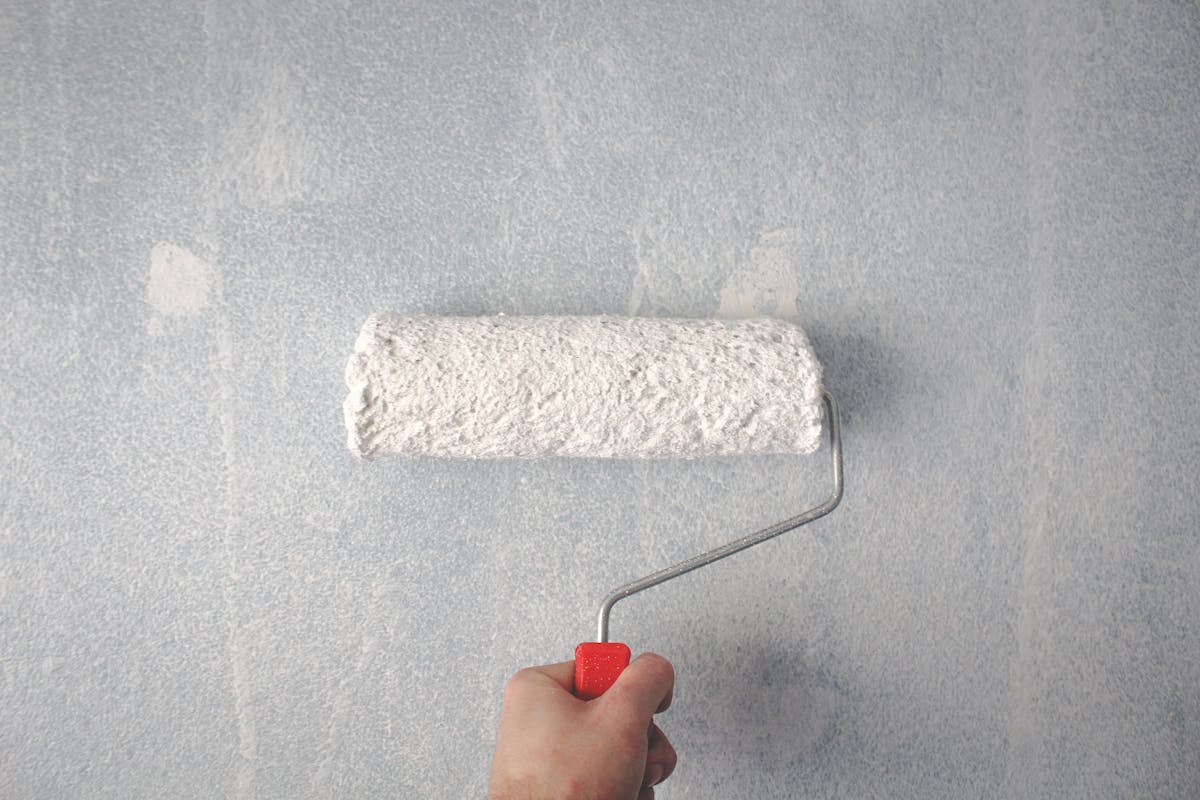
Paint flashing happens when the touched-up area has a different texture or sheen than the surrounding wall. Using a brush on a wall that was rolled leaves directional brush marks that reflect light differently. Diluting paint slightly and feathering with a mini-roller recreates identical orange peel stipple.
Worked Example: Touching Up 6 Picture Hanger Nail Holes
Patching and painting small nail holes in an eggshell painted hallway wall.
Total time invested is under 30 minutes and saves repainting the entire 200 sq ft hallway.
Is flat paint easier to touch up than satin or semi-gloss?
Yes! Flat paint reflects almost zero light, making touch-ups virtually undetectable. Higher sheens like satin or semi-gloss usually require painting corner-to-corner for a flawless finish.
Related calculators
Related articles
- How Much Paint Do You Need for a 12x12 Room?
- How to Calculate Exterior Paint Square Footage for Siding
- How Much Ceiling Paint Do I Need? Square Foot Formula
- How Many Gallons of Primer for Bare Drywall?
- How to Calculate Trim and Baseboard Linear Foot Paint
- How Much Paint for Kitchen Cabinets: Door & Box Formula
Sources
- PCA Trade Best Practices: Field Touch-Up and Color Matching — Painting Contractors Association