5 Ceiling Painting Mistakes That Leave Roller Lap Lines and Flashing
Ceiling roller lap lines and streaks occur when paint dries too quickly before adjacent roller passes can blend (losing the "wet edge"), using dry roller covers with too little paint, pressing too hard on the roller frame creating heavy edge ridges, rolling in random directions, or using paints with even slight sheen instead of dead flat ceiling paint.
Published 2026-03-01 · Updated 2026-03-01 · 8 min read
1. Maintaining a Continuous Wet Edge
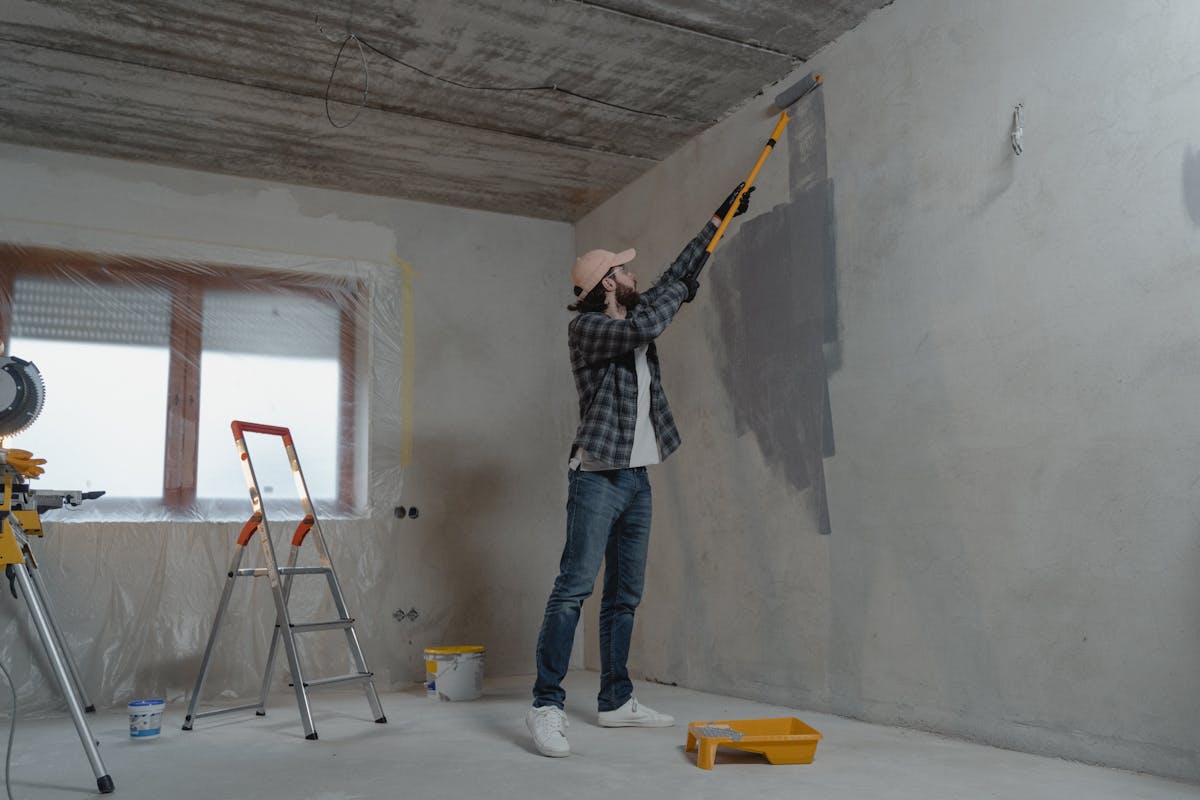
Ceiling paint must be applied in continuous overlapping strips (3–4 inches overlap) working across the narrow dimension of the room. Once a section begins to tack up (after 2–3 minutes), NEVER roll back over it. Going over semi-dry paint lifts the drying resin and creates a permanent rough stipple stripe that catches light.
2. Roller Direction and Natural Window Light Alignment
Always apply your final ceiling coat parallel to the primary source of natural window light. Rolling across the light path casts microscopic shadows behind every roller stipple ridge, making minor thickness differences glaringly obvious.
Worked Example: Rolling a 14×20 ft Living Room Ceiling Without Lap Lines
Executing a streak-free flat white paint application across 280 sq ft of smooth drywall.
Using an 18-inch roller with Floetrol cuts ceiling rolling time in half and eliminates lap lines completely.
How do I fix existing ceiling lap lines?
Sand the raised lap lines smooth with 150-grit sandpaper on a pole sander, wipe off dust, and apply one generous coat of dead flat ceiling paint using an 18-inch roller.
Related calculators
Related articles
- How Much Ceiling Paint Do I Need? Square Foot Formula
- How Much Paint Do You Need for a 12x12 Room?
- How to Calculate Exterior Paint Square Footage for Siding
- How Many Gallons of Primer for Bare Drywall?
- How to Calculate Trim and Baseboard Linear Foot Paint
- How Much Paint for Kitchen Cabinets: Door & Box Formula
Sources
- PCA Professional Trade Standards: Surface Uniformity Inspection — Painting Contractors Association